Letter by Letter Animation: Twist Effect in Flash CC | Art-341

Posted by: Ping

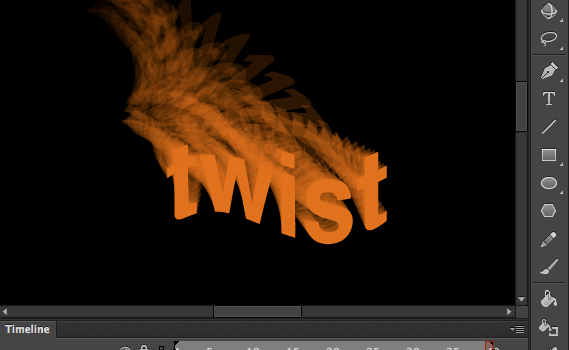
Click to view the Twist Effect Open the file “twist.fla“ Cmd J: 320 X 240 / Change the background color to Black Open Library: Drag the logo onto the stage / Cmd K Select Align to Stage, and Center the logo horizontally and vertically Rename the layer to Shape Double-click the layer icon of the […]

Art-341 Project-2: Type As Image / Kinetic Typography | Fall 2014

Posted by: Ping

Project-2: Type As Image (30 seconds kinetic typography in Flash) Project Size: 640 X 360 Date Range: September 2 – 30, 2014 Due Day: September 30, 2014 Project Description: Generating kinetic typography in Adobe Flash Pro Project Objective: Type makes words; as well as art. The purposes of this project are To create communication that explores […]

Nested Timeline | Flash CC

Posted by: Ping

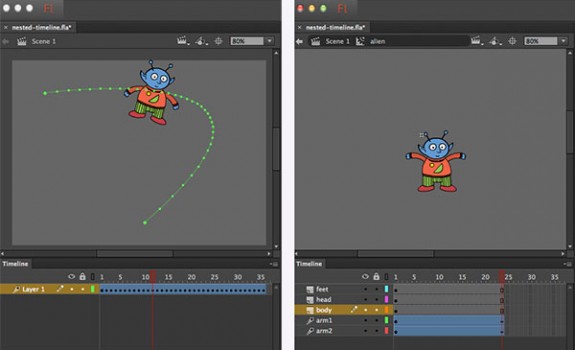
Creating a Nested Animation in Flash • Reopen the “motion-path.fla”, and double click the first movie clip symbol in the library (let’s edit the symbol by working on the symbol’s timeline) • At Frame 24, F5 for head layer, body layer, and feet layer • When tweening layers are ready, select the left arm, and […]

Art-425 : Senior Seminar
:::: Fall 2014 Calendar :::::

Posted by: Ping

Date Activity Room Aug 27 Discussion of Requirements / Syllabus MG 2001 Sept 3 University Portfolio – Portfolio Office – MG 2001 Sept 10 Register for Senior Test (PRAXIS) Nancy Asher – Coordinator of Testing & Reporting MG 2001 Sept 11 – 20** Senior Test (Computer-based) VH 1000 Sept 17 “How to Prepare for Grad […]

Art-127: New Majors Seminar :::::::: Fall 2014 Calendar :::::::::

Posted by: Ping

Date Activity Room August 27 Overview of Course / Syllabus Art Student Organization: 6:30 pm Kappa Pi | 6:40 pm: AIGA Club MG 2001 September 3 Saving Artifacts Online in the Portfolio Vault University Portfolio – Portfolio Office – Art Student Organization: 6:30 pm: Truman Media Network 6:40 pm: Clay People MG 2001 September 17 […]

Cylindrical Form | Art-202 – Fall 2014

Posted by: Ping

We picture the human figure as a series of geometric forms. The underlying geometric form is the cylinder. By drawing a human body in cylindrical form, you become aware not only of the body’s contours, but its dimensions as well.